I recently began a new sermon series at our church on the Gospel of John. The first message is on John 1:1-5, and it is titled “A Voice Plainer Than Thunder,” which is a line from John Chrysostom’s first homily on the fourth Gospel. After the message, someone asked me what resources I used to prepare the sermon. The answer is that my main resource is the text itself. I don’t mean that as a “Jesus juke” but as a description of my first and most important stage of sermon prep, which begins in reading and working with the Greek text. After that (sometimes during), I will read some commentaries.…
-
-
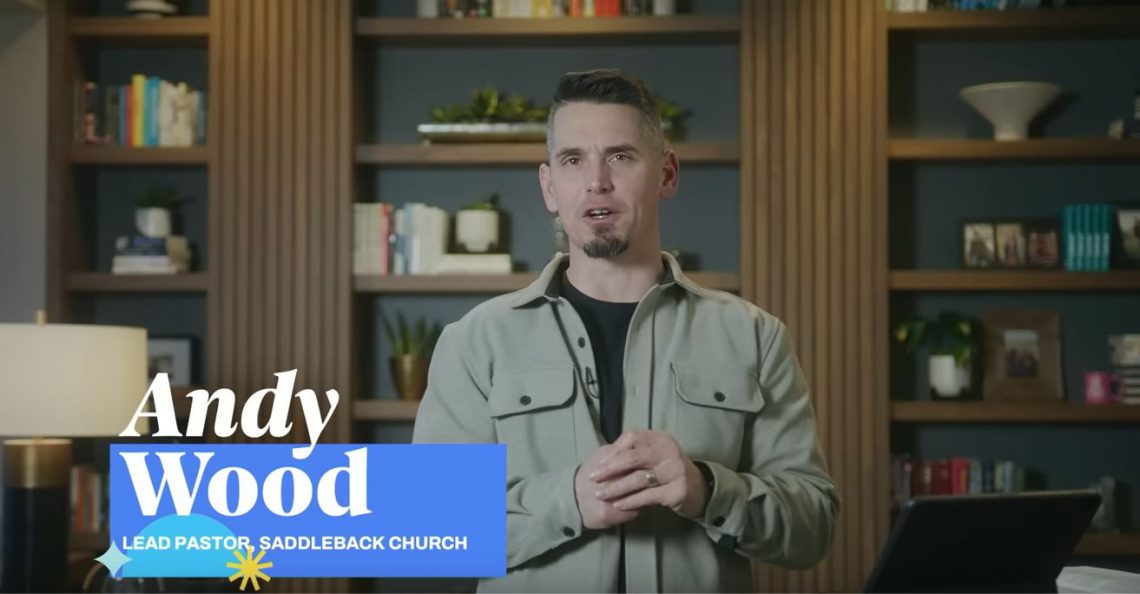
The New Pastor of Saddleback Makes the Case for Female Pastors
Over the last week or so, Rick Warren and his successor at Saddleback Andy Wood have made public arguments in favor of women serving as pastors. I addressed Rick Warren’s remarks in an article last week, and some readers have asked me to weigh-in on Wood’s remarks as well. Wood recorded a video explaining Saddleback’s decision, and there is a good deal of clarifying information in it (transcript here). To date, it’s probably the fullest explication of Saddleback’s view that I have seen, so that’s good. It’s also good to see that Wood wishes to affirm the authority of Scripture, to reject the transing of the culture, and to lay…
-
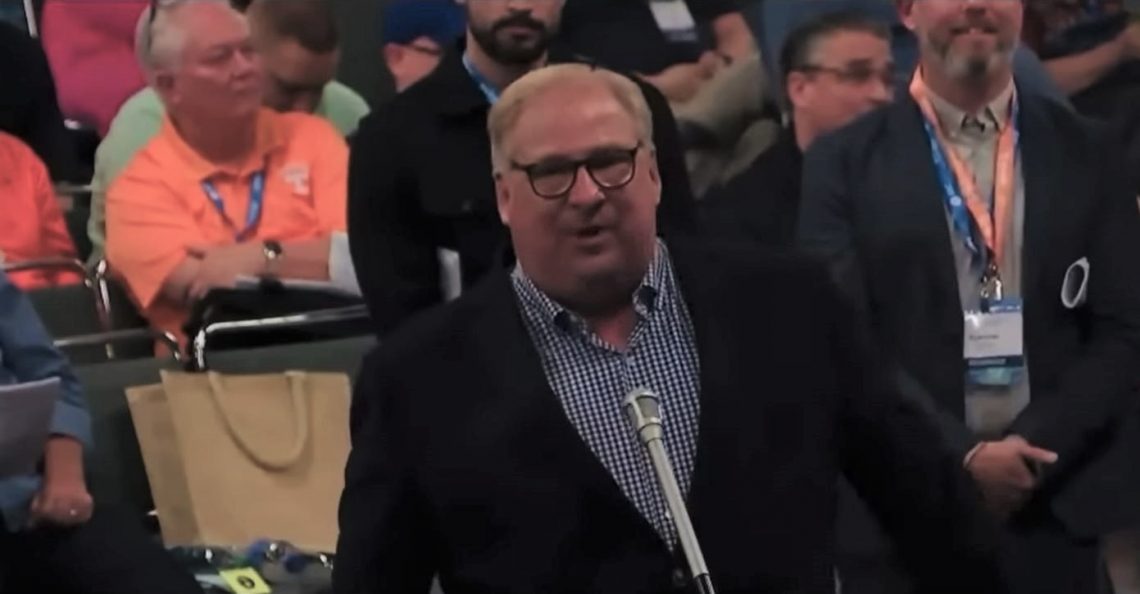
Rick Warren Has Done the SBC a Great Service
Last week, I had the opportunity to listen to Russell Moore’s provocative interview with Rick Warren, the former pastor of Saddleback Community Church. If you are a Southern Baptist and you haven’t heard it yet, I recommend that you take a listen or read the transcript here. Warren makes it crystal clear that he knows Saddleback is in defiance of the BF&M by ordaining women as pastors. He also says that Saddleback doesn’t need the SBC but that the SBC needs Saddleback. So it would be no skin off his nose to leave the SBC behind. Nevertheless, he’s going to fight Saddleback’s removal in order to make the SBC a…
-
Taking a Dog by the Ears
Last week people kept asking me if I was going to weigh-in on the drama du jour generated by a salacious post at The Gospel Coalition website. My response was that there was no way I would be taking this dog by the ears (Prov. 26:17). As far as I could tell, this was “strife” not belonging to me, and there was no sense in making it mine for no good reason. Nevertheless, over the weekend it became clear that the conversation had taken a turn in a way that implicates not just me but all complementarians. So here I am now. The controversy concerns an essay that Joshua Butler…
-
Sprinkle Reconsiders His Views on Complementarianism
Preston Sprinkle is reconsidering his views on the debate between complementarians and egalitarians. If I’m not mistaken, he has claimed the complementarian label up until this point. But now he’s doing a deep dive on the issue and is processing out loud so that others can follow him on his journey. Recently, he released a two-hour video in which he talks his way through the exegesis of 1 Timothy 2:11-15 and especially of verse 12 (watch video below). He announces at the outset that he is not going to come to any firm conclusions by the end of the discussion. He is merely going to talk through the issues. I…
-
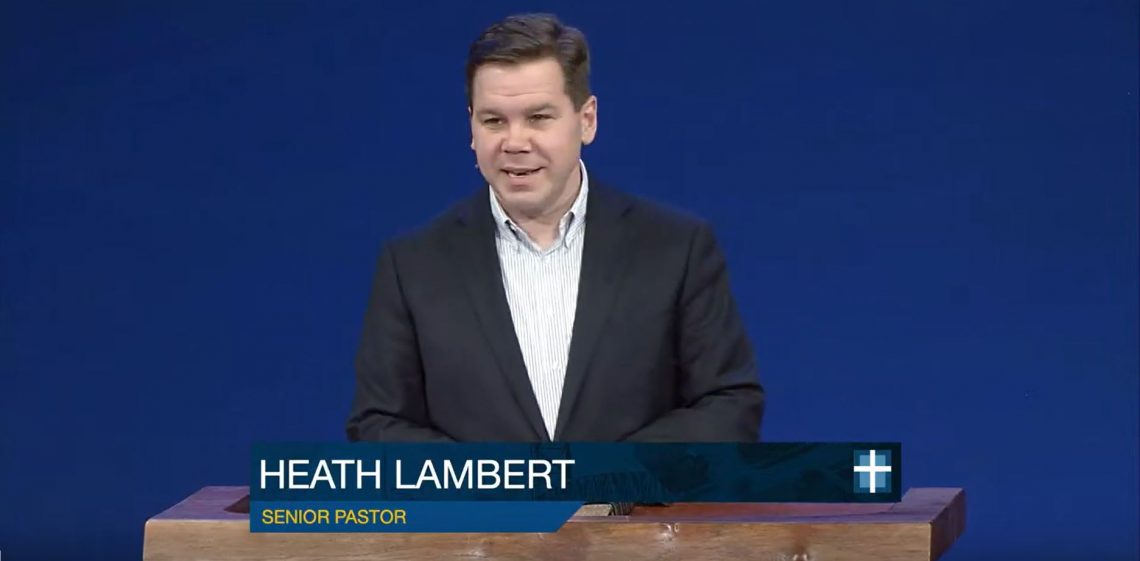
FBC Jax Speaks the Truth in Love about Sexuality
I just finished watching one of the most extraordinary things I’ve ever seen. A megachurch pastor and his congregation took a strong and clear stand on sexuality and gender, and then held an open mic forum for community members (hostile or otherwise) to come and speak or ask any question they wanted of the pastor. I have never seen anything like it, but it was astonishing. You can watch the video below, but first a little background. Some of you will recognize Heath Lambert’s name because he and I were coauthors of a book linked in the sidebar, Transforming Homosexuality. Heath now serves as the pastor of the First Baptist…
-
The Bible of “Trumpists”? Hardly.
Over the weekend, sociologist Samuel Perry raised eyebrows by suggesting that the ESV is the official Bible translation for “Trumpists.” I’m not sure what he was trying to accomplish with this. Was he trying to cast shade on the ESV by showing the nefarious characters who read such a translation? About an hour and a half after posting this, he shared some data that sort of deflates the nefarious connotation of his earlier claim. The data show that readers of the NIV, Amplified, and KJV are also likely Trump voters. He then draws a more limited conclusion, saying that “voters who read evangelical translations vote like evangelicals.” Hardly earth-shattering news.…
-
Does the Bible Portray the Triune God as Feminine?
Last night I posted an item on Twitter that received a good bit of negative reaction from some readers. While reading through Chapter 7 of Herman Bavinck’s excellent book The Christian Family, I posted several quotations from the chapter. This is something I frequently do when reading material that stands out to me. You can look through my timeline and see clusters of quotations from books that I believed were worth sharing. But a quotation from Bavinck last night seems to have touched a nerve. Here’s what I posted last night from Bavinck’s work (in order of appearance on my timeline): 12:06am: “People and nations were very different from each…
-
Can a true Christian lack assurance of salvation?
Thomas Watson addresses whether a true Christian may lack assurance of salvation: “We must distinguish between weakness of faith and nullity. A weak faith is true. The bruised reed is but weak, yet it is such as Christ will not break. Though thy faith be but weak, yet be not discouraged. A weak faith may receive a strong Christ; a weak hand can tie the knot in marriage as well as a strong; a weak eye might have seen the brazen serpent. The promise is not made to strong faith, but to true. The promise doth not say, Whosoever hath a giant faith that can remove mountains, that can stop…
-
What Happened at the Rocky Mountain ETS?
Another annual meeting of the Evangelical Theological Society (ETS) is now in the books. We met in Denver, Colorado this year, and it was a really good week. For those of you unfamiliar with ETS, it is a society of theologians and biblical scholars who are dedicated to biblical inerrancy and a belief in the Trinity. At the annual meeting, members come together to present academic papers, meet with publishers, and catch up with old friends. Keep in mind that I only experienced a narrow slice of things, but here are my reflections on what I saw. 1. Denver, Colorado It’s really cold there. It’s also a place where marijuana…